What Breast Augmentation Can Enhance
Breast Augmentation Options
When it comes to breast augmentation, there is no one-size-fits-all system. Everyone’s body is different, which is why there are so many options, from implant type to incision location. Dr. Green will use his artistic eye to evaluate your specific needs during your consultation and determine which implant options will give you the personalized, stunning results you want.
Implant Type
Silicone
The denser texture in silicone allows silicone breast implants to feel more like human tissue and fat when touched. The implants also have a reputation for creating breasts that look more natural.
The FDA has approved silicone implant use in women 22 years and older. Silicone implants are less likely to wrinkle or break than saline implants. Despite the rupture rate of silicone implants being very low in the first 10 years, it is advised that patients screen silicone implants 5 years after initial placement, and then every 3 years with an MRI, mammogram or ultrasound since a silicone implant rupture is hard to detect.
Saline
On average, saline breast implants are less expensive than silicone options. After putting the empty shell into the body, Dr. Green will fill the implant with sterile salt water to the size specified by the patient. Because saline implants can enter the body in a smaller size than silicone implants, breast augmentation with saline implants can require smaller incisions and more choice in where those smaller incisions are placed.
The FDA approved saline implant use in women 18 years and older. Although ruptured implants are rare, the breast will start to look deflated, which should alert the patient that a rupture has occurred.
Round
Round implants augment the breasts more fully, adding density to the top of the breasts as well as the bottom. This style is best at creating a more appealing cleavage. They are less expensive on average and can be filled with either saline or silicone.
Implant Placement
Submuscular
• Lower risk of capsular contracture, visible rippling, and bottoming out
• Less interference with mammographic studies
Subglandular
• Less pain and a shorter recovery
• Ideal for patients with sufficient breast tissue to cover the implant
Incision Location
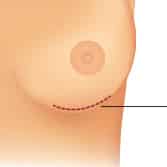
Inframammary
• Allows the surgeon to have greater control over implant placement
• Scar can be easily hidden by clothing
• Can be used with saline or silicone implants
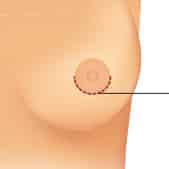
Periareolar
• Allows the surgeon to have moderate control over implant placement
• Minimal scar visibility
• Usually only performed using saline implants
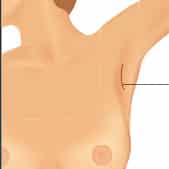
Transaxillary
• No visible scarring on the breasts
• Usually only performed using saline implants
Combinations
Breast Augmentation Concerns
Recovery
Patients can expect some soreness, swelling, and bruising following breast augmentation. Most discomfort dissipates after a few days, and patients may return to work within a few days to a week after surgery. Strenuous physical activity should be avoided for three weeks, and exercises engaging the chest muscles should be avoided for longer. Women are advised to wear a surgical bra for several months following surgery, both day and night.
Results
Breasts will be noticeably larger and firmer immediately after surgery, but the long-term results of breast augmentation become more pronounced in three to four months. It can take about six months for the breasts to soften to a natural texture. Although breast augmentation has no expiration date, most breast implants can safely remain in the body for 10 to 20 years before removal and/or replacement is warranted. Patients should speak to a doctor if they notice an implant deflate, ripple, stiffen, shift out of place or rupture.
Scars
Because incisions are placed in discreet locations, any scars usually go unnoticed. Over time, any visible scarring is likely to fade.
Incisions can be placed along the natural crease where the bottom of the breast meets the chest, around the areola or even inside the armpit, giving patients some say in where the scars will be.
Cost
The cost of breast augmentation depends greatly on several factors including (but not limited to) technique, implant type, and anesthesia fees. At your consultation appointment, Dr. Green’s financial coordinator will be able to calculate the costs for your unique procedure.
Pain
To manage any pain-related discomfort, patients may take oral pain relievers as recommended by Dr. Green.

The Art of Plastic Surgery
Surgical skill can be learned, but surgical artistry is something a person must be born with. Dr. Scott Green has the inherent aesthetic and anatomical understanding necessary to deliver results of utmost transcendence to all of his patients. By applying his irrefutable grasp of beauty and state-of-the-art surgical techniques, Dr. Green sculpts his patients’ contours for the most dazzling and customized outcome.
“Every block of stone has a statue inside it, and it is the task of the sculptor to discover it.” – Michelangelo di Lodovico Buonarroti Simoni
Breast Augmentation Videos
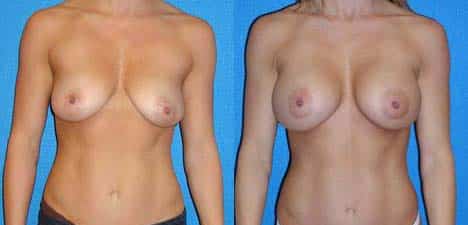
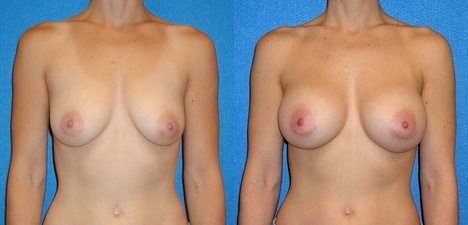
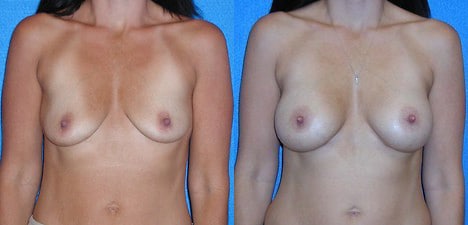
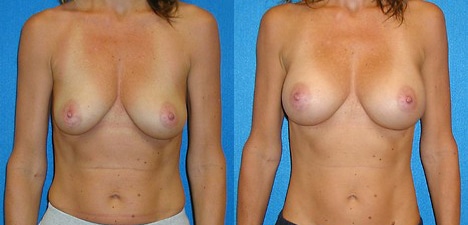
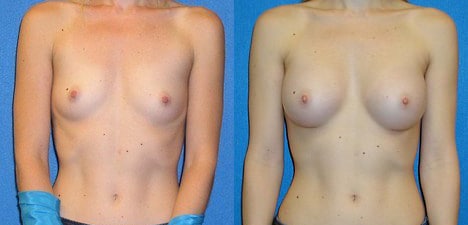
Our Patients Love Their Results
Frequently Asked Questions
-
How long is breast augmentation surgery?
Breast augmentation takes about one to two hours.
-
Will I be able to breastfeed with implants?
Yes; implants do not generally interfere with the ability to breastfeed. Discuss your concerns with Dr. Green, and he will help you determine the best approaches to ensure that you can breastfeed after breast augmentation.
-
Should I quit smoking before undergoing breast augmentation?
Yes. Smoking interferes with the healing process and should be avoided for three weeks before and three weeks after surgery.
-
Can breast implants harden?
The implants themselves do not harden, but hard scar tissue can form around the implant and squeeze it. This is called capsular contracture and can occur with both saline and silicone implants. This is one of the risks of breast augmentation that will be discussed with you at your consult.
-
How do I know which implant size will look natural on my body?
Choosing the right implant size is less about cup size and more about proportion. Factors such as your chest width, shoulder frame, height, skin elasticity, and existing breast tissue all influence what will look balanced and natural. During your consultation, Dr. Scott Green takes detailed measurements and discusses your aesthetic goals to recommend implant sizes that complement your body rather than overwhelm it.
-
Can breast augmentation improve asymmetry between my breasts?
Yes. Many women have natural breast asymmetry, where one breast differs in size or shape from the other. Breast augmentation can be customized to address these differences by using implants of varying sizes or adjusting placement. Dr. Green carefully evaluates asymmetry during the consultation and designs a surgical plan to achieve improved balance.
-
Will implants feel natural to the touch?
Modern breast implants, especially silicone implants, are designed to closely mimic the feel of natural breast tissue. Implant placement, size selection, and your own tissue coverage all influence how natural implants feel after healing. Over time, as swelling resolves and the implants settle, most patients report that their breasts feel soft and natural.
-
Can I change my implant size in the future?
Yes. Implant exchange is a common and straightforward revision procedure for patients whose preferences change over time. Some women choose to go larger or smaller years after their initial augmentation, while others update implant type as technology advances. Dr. Green can discuss long-term planning and how your initial choices may affect future options.
-
How does implant placement affect results?
Implants can be placed either above or below the chest muscle, depending on anatomy and goals. Submuscular placement often provides a more gradual slope and additional tissue coverage, while subglandular placement may be appropriate for patients with sufficient natural breast tissue. Dr. Green explains the benefits of each option and recommends placement based on your body and desired outcome.
-
Will breast augmentation affect future mammograms?
Breast implants do not prevent mammograms, but special imaging techniques are used to visualize breast tissue properly. It’s important to inform your imaging provider that you have implants. Routine breast screenings should continue as recommended, and implants typically do not interfere with detection when performed by experienced technicians.
-
How long should I wait after pregnancy or breastfeeding before surgery?
Most patients are advised to wait several months after breastfeeding ends to allow breast tissue to stabilize. This helps ensure predictable results and reduces the chance of additional changes after surgery. Dr. Green evaluates timing carefully to support long-term outcomes.
-
What happens if I don’t replace my implants?
Breast implants do not have a fixed expiration date, and replacement is not required unless an issue develops or personal preferences change. Regular follow-up and self-awareness are important, and Dr. Green can advise you on monitoring implant integrity over time.
-
Why choose Dr. Scott Green for breast augmentation?
Dr. Scott Green is a board-certified plastic surgeon with extensive experience in breast augmentation and revision procedures. Known for his attention to detail and personalized approach, he focuses on results that look balanced, refined, and natural. Patients are seen at his Sacramento and Granite Bay offices, where care is tailored to each individual’s anatomy, goals, and long-term satisfaction.